Burnout Isn’t a Workload Problem: How to Break the Overwork Cycle
Apr 17, 2026
Burnout isn’t caused by workload, it’s a repeated behavioural loop
You push past your limits even when you know you should stop
The issue isn’t discipline, it’s acting against your own signals
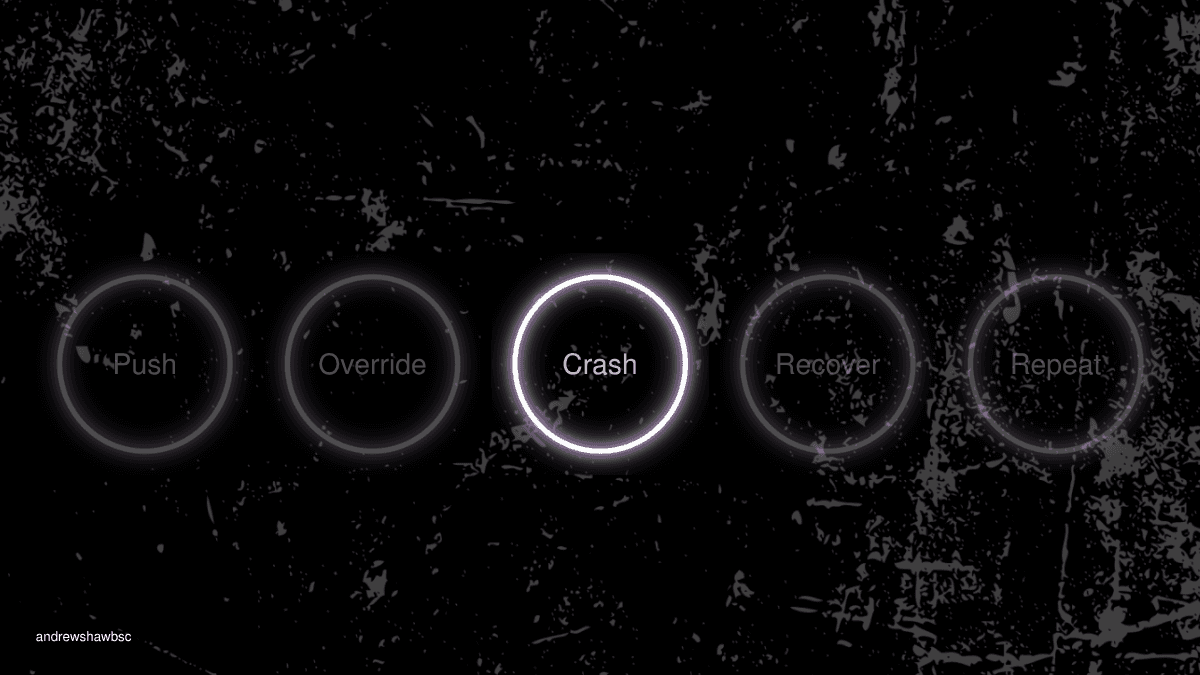
The cycle: push → override → crash → recover → repeat
Change happens when you stop at the moment you feel the urge to keep going
Burnout is often blamed on long hours, heavy workloads, or poor time management.
That’s not the real issue.
If you keep burning out despite taking breaks, resetting, and trying new routines, you’re not dealing with a workload problem.
You’re stuck in a pattern.
The Burnout Cycle Most People Miss
It usually looks like this:
You start strong. Focused. Motivated. Productive.
You push hard and build momentum. Then you reach the point where your energy drops and you should stop.
Yet you don’t.
You override it. Keep going. Push through.
Eventually, your system forces the stop:
Burnout
Exhaustion
Mental shutdown
So you rest. Reset. Take time off.
Then you return and repeat the exact same cycle.
This is the overwork loop that keeps people stuck.
Why Burnout Isn’t a Discipline Issue
Most people assume the problem is discipline.
They think:
“I need better balance”
“I need a better routine”
“I need more self-control”
But if that were true, you would stop when it matters.
You already know when you’ve reached your limit.
Late in the day.
At the end of the week.
When your energy drops and your focus fades.
The issue isn’t awareness.
It’s your inability to act on that awareness in the moment.
The Hidden Driver Behind Overworking
On the surface, overworking looks like ambition or productivity.
Underneath, it’s something else.
A compulsion to keep going. To override internal signals. To avoid slowing down.
This is where burnout is created, not from workload, but from a loss of control over your own behaviour.
The pattern looks like this:
Push → Override → Crash → Recover → Repeat
Until it’s interrupted, it will keep running.
The Real Cost of Burnout
Burnout doesn’t just affect your work.
It spills into everything else:
Reduced presence in relationships
Irritability and emotional fatigue
Loss of clarity and decision-making ability
A growing sense that you’re not in control of your life
Over time, the biggest loss isn’t energy.
It’s self-trust.
You stop believing you’ll act in line with your own limits.
How to Break the Burnout Cycle
You don’t fix this with better time management.
You fix it by changing what happens at the critical moment, the point where you feel the urge to keep pushing.
Breaking the cycle requires:
1. Recognising the “edge”
Notice the exact moment your energy drops but you continue anyway.
2. Interrupting the pattern
Instead of pushing through, pause.
Not later. Not after one more task. Right there.
3. Acting against the impulse
Choose to stop, even when it feels uncomfortable or unproductive.
This is where control is built.
Why Most People Stay Stuck
Most people never develop the ability to sit with the discomfort of stopping.
Pushing feels productive. Stopping feels like failure.
So they stay in the loop.
They optimise schedules, redesign routines, and look for better systems.
While the real issue remains untouched.
The Real Solution to Burnout
The solution isn’t working less.
It’s regaining control at the moment where your behaviour starts to drift.
To feel the pressure to keep going, and not automatically obey it.
That’s the difference between: Temporary recovery and breaking the cycle
Final Thought
You don’t have a workload problem.
You have a pattern that hasn’t been interrupted.
Until you change what happens at the edge, where stopping becomes available but uncomfortable, you’ll keep repeating it.

High-Functioning Burnout: When Your Life Still Works but You’re Not Okay
Sep 11, 2026

Why bad habits are so hard to break and how to break them
Sep 4, 2026

They don’t have to respect your boundaries. You do.
Aug 28, 2026

How to Build Confidence: Stop Waiting Until You Feel Ready
Aug 21, 2026