Why you stay calm at work but lose your temper at home
Oct 16, 2026
TL;DR
You can stay composed at work but become reactive at home because the emotional stakes are more personal.
Criticism, being ignored or disagreement can carry meanings like rejection or disrespect, intensifying your response.
Emotional regulation isn’t about always feeling calm; it’s about choosing your behaviour when you’re not.
Repeated shouting, defensiveness or withdrawal can gradually create distance in your closest relationships.
You already demonstrate self-control elsewhere. The work is learning to access it when it matters most.
You sit through high-stakes negotiations and keep your temper.
Your child ignores you twice, and you snap.
Your boss sends you a sharp email, and you reply professionally.
Your partner criticises something you’ve done, and you explode.
Your colleagues experience you as measured and composed.
Your family sees something else.
If you can control your emotions at work but lose your temper at home, it can be confusing. You clearly have the capacity to regulate your behaviour under pressure. So why can that capacity seem to disappear around the people you love?
The answer isn't necessarily that you lack emotional regulation.
The emotional stakes are different.
Why Do I Get Angry at Home but Not at Work?
At work, you might disagree without shouting.
You can feel frustrated and remain professional.
You can receive criticism, pause and consider your response.
There are expectations around your behaviour. You have a professional role to fulfil. The consequences of losing your temper are obvious.
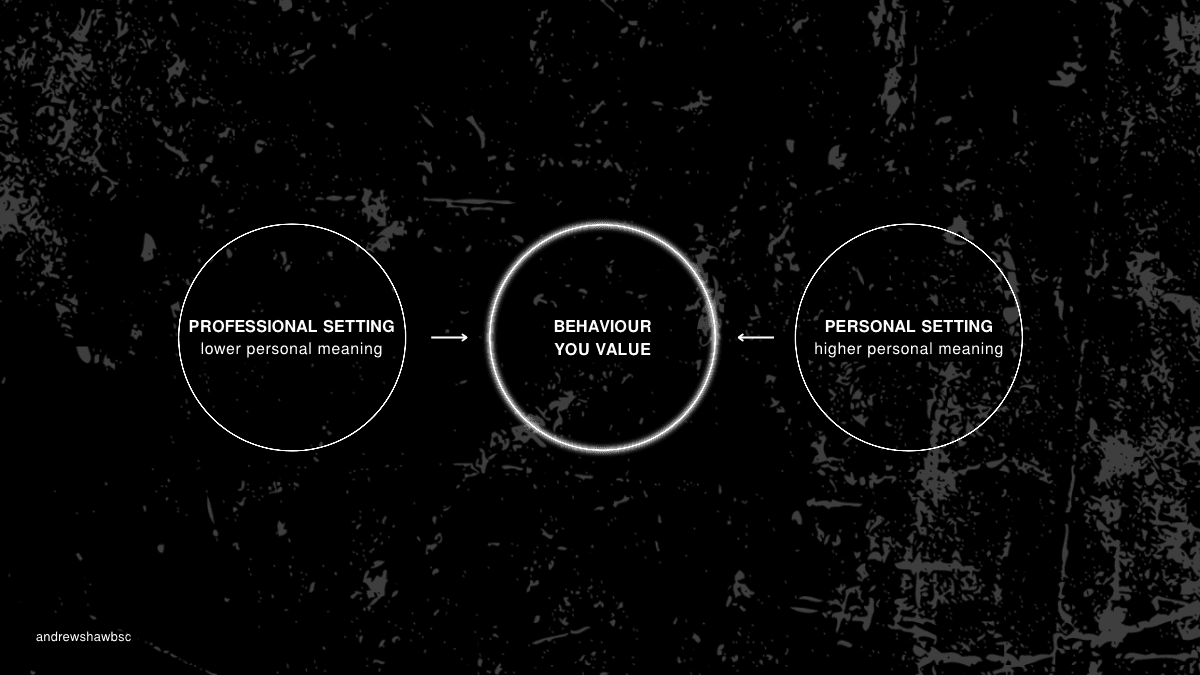
At home, the same degree of emotional distance doesn't exist.
It’s personal.
Criticism from your partner can feel different from criticism from your boss.
Your child ignoring you can be interpreted as disrespect.
A disagreement with someone you love can feel like rejection.
What happened matters. So does the meaning your mind gives to what happened.
That meaning can influence the emotion you experience and the behaviour that follows.
Emotional Regulation Isn't About Always Feeling Calm
One of the biggest misconceptions about emotional regulation is that you need to become calm before you can behave calmly.
You don't.
You can feel angry without shouting.
You can feel hurt without attacking.
You can feel criticised without becoming defensive.
You can feel overwhelmed without withdrawing.
Emotional regulation isn't the absence of uncomfortable emotion. It involves developing greater choice over what you do when those emotions appear.
This matters because waiting until you feel differently can leave your behaviour dependent on your emotional state.
The question becomes less: “How do I stop feeling angry?”
And more: “How do I want to behave when anger is present?”
The Accumulation of Small Emotional Reactions
Shouting once doesn't necessarily destroy a relationship.
Neither does becoming defensive during one argument or withdrawing from one difficult conversation.
The problem is repetition.
You shout.
Withdraw.
Get defensive.
Apologise.
Things settle down.
Then it happens again.
Each interaction can create a little more distance between you and the people you care about.
Eventually, something that appears insignificant happens and the other person checks out.
You’re left wondering:
Why this? Why now?
But it often wasn't just that moment.
It was the accumulation of all the moments before it.
Relationships rarely experience their difficulties as isolated incidents. Repeated behaviour becomes a pattern, and patterns influence how safe, connected and understood people feel around one another.
You Already Know How to Control Your Behaviour
There is something important hidden inside the difference between your behaviour at work and your behaviour at home.
You don't necessarily need to learn self-control from scratch.
You demonstrate that capacity every day.
You already know how to experience frustration without immediately acting on it.
You already know how to receive criticism and consider your response.
You already know how to disagree without shouting.
You already know how to remain considered when someone else is difficult.
The work is learning to access those behaviours when the stakes become personal.
When you're hurt.
When you feel criticised.
When your child won't listen.
When your partner says something that gets under your skin.
When every part of you wants to defend, attack or withdraw.
Those are the moments in which emotional regulation becomes more than something you understand intellectually.
It becomes something you practise.
How to Stop Snapping at Your Family
Start by separating how you feel from what you do.
When you notice yourself becoming activated, identify what's happening:
I'm angry.
I'm hurt.
I'm feeling criticised.
I'm having the thought that they don't respect me.
Then ask:
“What behaviour would reflect the person I want to be right now?”
You don't have to make the anger disappear before answering.
The aim isn't to suppress what you're feeling.
It's to experience the emotion without automatically allowing it to determine what happens next.
Then practise the response you want while the feeling is still present.
Pause instead of shouting.
Stay in the conversation instead of withdrawing.
Ask a question instead of immediately defending yourself.
Take some space and return to the conversation instead of using silence as punishment.
Every repetition is practice in experiencing an uncomfortable internal state without automatically returning to the same behavioural response.
Your Family Doesn't Need Perfection
You're going to become frustrated.
Your children will push against you.
Your partner will occasionally say things that hurt.
You'll misunderstand each other.
You'll sometimes get your response wrong.
The goal isn't perfection.
It's becoming more consistent in how you behave when things become difficult.
Because the people closest to you shouldn't repeatedly receive the version of you that appears when your emotions become personal.
Your family doesn't need you to always feel calm.
They need you to learn how to exhibit the behaviour you value when you're not.
Why you stay calm at work but lose your temper at home
Oct 16, 2026

You Don’t Need to Feel Calm to Act Calmly
Oct 9, 2026

Why Do I Procrastinate Even When I Have Time?
Oct 2, 2026

How to respond differently to stress and difficult emotions
Sep 25, 2026