Happiness is not a choice; your actions are
May 8, 2026
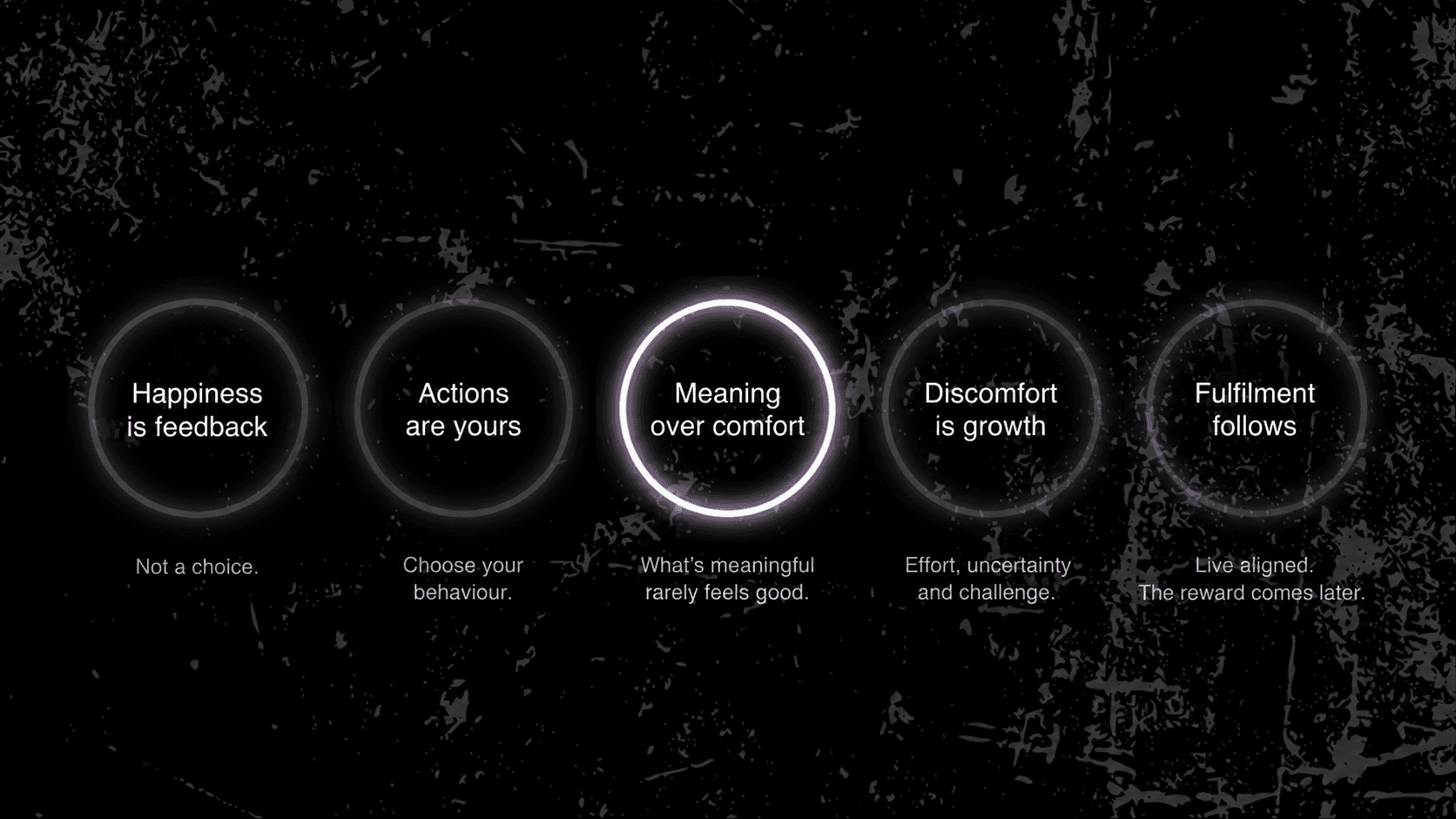
Happiness isn’t a choice, your actions are.
Feelings are temporary; values should guide decisions.
Meaningful growth often requires discomfort and uncertainty.
Avoiding discomfort leads to stagnation and disconnection.
Fulfilment comes from living in alignment with what matters most.
You’ve probably heard the phrase:
“Happiness is a choice.”
It sounds wise.
Encouraging.
Even empowering.
It’s misleading.
Happiness is not a choice.
What you do is.
The problem with chasing happiness
Many people judge life through momentary feelings.
If something feels uncomfortable, one avoids it.
If something feels difficult, they delay it.
If something creates tension, he or she escapes it.
When feelings become the compass for decision-making, life slowly drifts away from meaning.
You avoid:
The boundary you need to set
The difficult conversation you need to have
The challenge that would help you grow
The responsibility that would move your life forward
In the short term, avoidance feels easier.
In the long term, it creates disconnection, resentment, anxiety, and stagnation.
Happiness is feedback, not a direction
Happiness is not something you pursue directly.
It’s feedback. A by-product of living in alignment with what matters.
Meaningful living often produces moments of happiness, but meaning itself rarely begins with comfort.
In fact, the things that matter most usually require:
Effort
Uncertainty
Patience
Sacrifice
Emotional discomfort
Growth rarely feels good while it’s happening.
Why most people stay stuck
Most people are not avoiding happiness.
They’re avoiding discomfort.
But discomfort is often the entry point to:
Confidence
Self-respect
Purpose
Intimacy
Progress
The irony is that the constant pursuit of feeling good can create a deeply unfulfilling life.
While choosing meaningful action, despite discomfort, often creates genuine fulfilment.
Stop asking, “What feels good?”
A more useful question is:
“What matters enough that I’m willing to feel discomfort for it?”
Because meaningful action comes first.
The emotional reward follows later.
Final thought
You can’t always choose your emotional state, but you can choose your behaviour.
You can choose honesty over avoidance. Responsibility over passivity. Growth over comfort.
Over time, those choices shape a life that feels deeply worth living.

How to respond differently to stress and difficult emotions
Sep 25, 2026

Why You Keep Waiting to Feel Ready Before Taking Action
Sep 18, 2026

High-Functioning Burnout: When Your Life Still Works but You’re Not Okay
Sep 11, 2026

Why bad habits are so hard to break and how to break them
Sep 4, 2026