Overthinking Isn't the Problem: Why You're Really Stuck
Jun 12, 2026
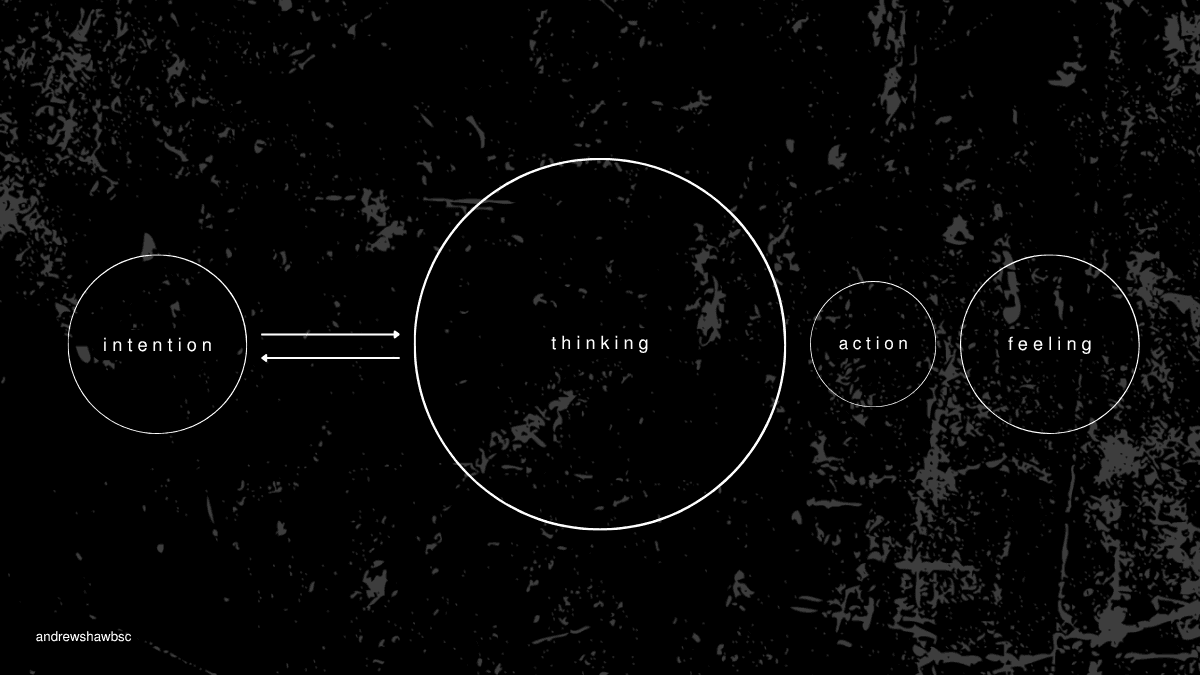
Overthinking isn't the problem.
It's a strategy your mind uses to avoid uncertainty, fear, vulnerability, or discomfort.
You're not stuck because you need more information.
You're stuck because thinking feels safer than feeling uncomfortable emotions.The more you avoid discomfort, the less capable you feel of handling it.
This fuels even more overthinking and creates a self-reinforcing cycle.Overthinking isn't solved through certainty.
It's solved through developing a greater willingness to experience uncertainty.The goal isn't to eliminate discomfort.
The goal is to build the capacity to feel it without letting it stop you from taking action.
Overthinking Isn't the Problem: Why You're Really Stuck
One of the most common concerns people bring to me is overthinking.
They tell me they're trapped in their heads.
Unable to make decisions.
Replaying conversations.
Analysing every possible outcome.
Searching for certainty before they act.
What surprises them is when I tell them this:
Overthinking isn't the problem.
It's the solution.
More specifically, it's a solution you've cultivated to avoid uncertainty, vulnerability, fear, or discomfort.
Why Do We Overthink?
When we're faced with a difficult decision, an uncomfortable conversation, or an uncertain outcome, the mind gets to work.
It analyses.
Imagines scenarios.
Replays conversations.
Searches for answers.
The strategy becomes:
"If I think about this long enough, I'll find a solution that removes the discomfort."
The problem is that certainty rarely arrives.
Which is why so many people remain stuck.
They're replaying conversations instead of having them.
Preparing instead of acting.
Researching instead of deciding.
Thinking instead of doing.
The issue isn't a lack of information.
It's an attempt to avoid an uncomfortable emotional experience.
The Hidden Function of Overthinking
Most people assume overthinking is caused by not knowing enough.
In reality, overthinking often serves a different purpose.
It helps us avoid feeling uncomfortable emotions.
Fear.
Uncertainty.
Embarrassment.
Disappointment.
Vulnerability.
The mind would rather keep analysing than risk experiencing these feelings.
The irony is that the more we avoid discomfort, the less capable we become of handling it.
And the less capable we feel, the more thinking we employ to compensate.
This creates a self-reinforcing cycle:
Uncertainty creates discomfort.
Discomfort triggers overthinking.
Overthinking delays action.
Delayed action maintains uncertainty.
Uncertainty creates more discomfort.
Round and round it goes.
How to Stop Overthinking
Most people try to solve overthinking by eliminating uncertainty.
But overthinking isn't solved through certainty.
It's solved through a willingness to experience uncertainty.
That's an important distinction.
The goal isn't to become more certain.
The goal is to become more comfortable being uncertain.
When you can tolerate uncertainty, you no longer need endless thinking to protect yourself from it.
What Physical Discomfort Can Teach You About Overthinking
This is one of the reasons I'm such a strong advocate for physical training, cold exposure, endurance challenges, and other forms of voluntary discomfort.
Not because suffering is inherently valuable.
But because these experiences teach a lesson that directly applies to everyday life:
You can experience discomfort without needing to escape it.
When you step into cold water, your mind says:
"Get out."
Halfway through a difficult run, your mind says:
"Slow down."
Just before an awkward conversation, your mind says:
"Not now."
When you're about to make an important decision, your mind says:
"Wait a little longer."
Different situations.
Same mechanism.
The Connection Between Physical and Emotional Discomfort
Your nervous system responds to both physical and emotional discomfort as signals of potential threat.
One of the mind's primary objectives is to move you away from pain.
The problem is that many of the things required to build a meaningful life involve discomfort.
There's discomfort in:
Setting boundaries
Asking for what you want
Making difficult decisions
Taking risks
Being vulnerable
Having challenging conversations
Facing uncertainty
Pursuing ambitious goals
You cannot build the life you want without regularly encountering discomfort.
The question is whether you're willing to experience it.
Building Tolerance for Discomfort
Every time you remain with physical discomfort rather than immediately escaping it, you strengthen your capacity to tolerate discomfort.
Over time, that capacity transfers.
You become more willing to experience difficult emotions.
More willing to feel uncertainty.
More willing to take action before you feel ready.
And when you're willing to experience discomfort, something interesting happens:
You stop trying to think your way around it.
You simply take the next step.
The Real Solution to Overthinking
The goal isn't to eliminate uncertainty.
The goal isn't to silence discouraging thoughts.
The goal isn't to find the perfect answer before acting.
The goal is to become willing to feel what your overthinking is trying to protect you from.
Because there's no meaningful path around discomfort.
Only a greater willingness to experience it.
And that willingness is often the difference between a life spent analysing and a life spent living.
Final Thought
If you've been asking yourself how to stop overthinking, consider a different question:
What uncomfortable feeling am I trying not to experience?
The answer may reveal that overthinking isn't your problem at all.
It's simply the strategy you've been using to avoid one.

How to Stop Being Controlled by Your Emotions
Oct 23, 2026
Why you stay calm at work but lose your temper at home
Oct 16, 2026

You Don’t Need to Feel Calm to Act Calmly
Oct 9, 2026

Why Do I Procrastinate Even When I Have Time?
Oct 2, 2026