Why small choices shape your life more than you think The hidden link between your thoughts, actions, and confidence
Jun 5, 2026
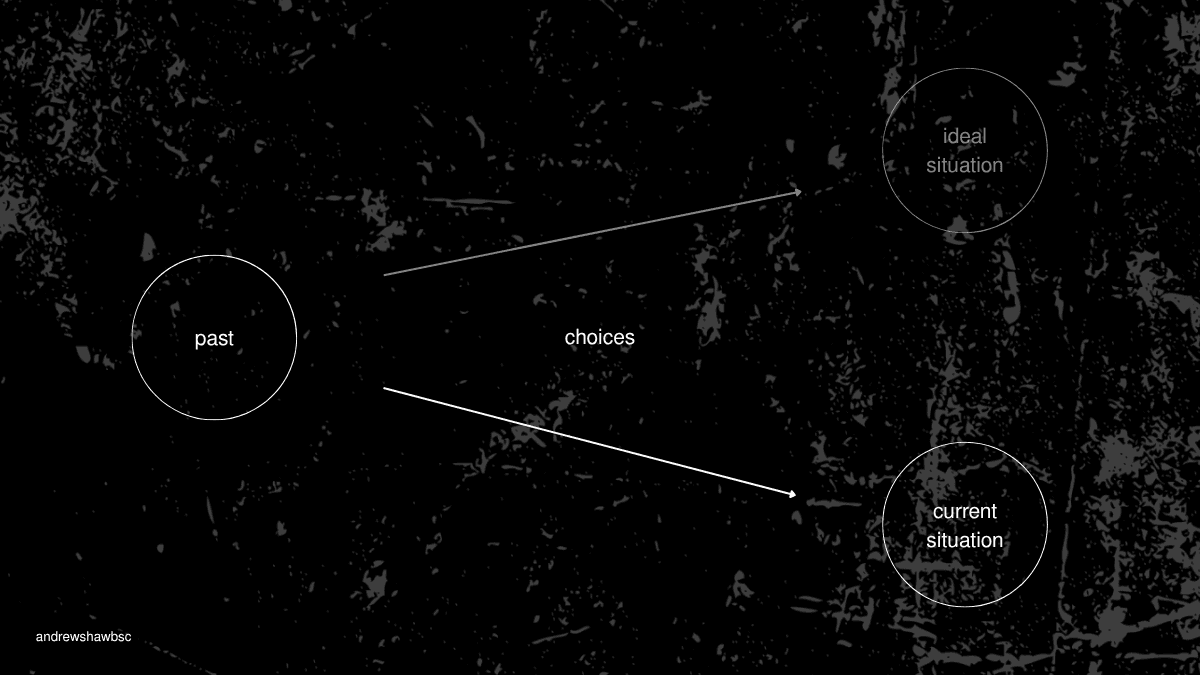
Your life is largely shaped by the small choices you repeat every day.
Thoughts influence emotions, emotions influence behaviours, and behaviours create outcomes.
Repeating the same patterns leads to the same destination, whether you like it or not.
Confidence doesn't come before action; confidence is built by consistently doing what matters despite discomfort.
If you want a different future, start taking actions that align with your values today.
It's easy to look back at a previous version of yourself with a sense of longing.
Perhaps you remember a time when life felt simpler. Before the consequences of unhealthy habits had accumulated. Before relationships became strained. Before your health declined. Before procrastination, avoidance, or self-doubt became recurring themes in your life.
When we reflect on difficult periods, it's tempting to blame circumstance, bad luck, other people, or events outside of our control.
While external factors undoubtedly influence our lives, a closer examination often reveals something uncomfortable but empowering:
Our lives are largely shaped by the patterns of thought and behaviour we repeat every day.
The direction of our life is rarely determined by a single decision. Instead, it is shaped by thousands of small choices that compound over time.
How thoughts influence behaviour
Most people focus on changing their behaviours without understanding what drives them.
Beneath most behaviours are emotions.
Beneath those emotions are the thoughts we repeatedly return to.
When we continually become entangled with the same thoughts, they begin to influence how we feel. Those feelings then shape the actions we take, or fail to take.
For example:
"I'm not good enough" may lead to anxiety.
Anxiety may lead to avoidance.
Avoidance may lead to missed opportunities.
Missed opportunities may reinforce the belief that you're not capable.
Over time, a self-reinforcing cycle emerges.
The thought creates the emotion.
The emotion influences the behaviour.
The behaviour produces outcomes that appear to validate the original thought.
This is one of the most common ways people become stuck.
Not because they're incapable of change, but because they're unknowingly repeating patterns that keep producing the same results.
The cycle of self-sabotage
Many forms of self-sabotage follow this pattern.
You want to exercise, but you don't.
You know you need to have a difficult conversation, but you avoid it.
You want to start the project, but you keep putting it off.
In the moment, avoidance often provides temporary relief, but every time we move away from what matters, we pay a hidden price.
We weaken trust in ourselves.
Part of us begins to notice that our intentions and actions are no longer aligned.
The result is often frustration, guilt, disappointment, and reduced self-confidence.
Ironically, many people believe they need confidence before they can act.
The reality is usually the opposite.
Confidence doesn't create action. Action creates confidence
One of the biggest misconceptions in personal development is the belief that confidence comes first.
Many people wait until they feel motivated, ready, or confident before taking action.
Unfortunately, that moment often never arrives.
Confidence is not a prerequisite for action.
Confidence is the result of action.
Every time you do something difficult, uncomfortable, or meaningful, you collect evidence that you can rely on yourself.
Every difficult conversation you have.
Every workout you complete.
Every boundary you uphold.
Every promise you keep to yourself.
Each action becomes proof.
Proof that you can tolerate discomfort.
Proof that you can handle challenges.
Proof that you can trust yourself.
Over time, that evidence accumulates into genuine confidence.
Not confidence based on positive thinking, but confidence grounded in experience.
How self-trust is built
Self-trust develops when your actions consistently align with your values.
It grows when you follow through on what you know matters, even when you don't feel like it.
This might look like:
Having the conversation you've been avoiding.
Being the example you want to set for your children.
Maintaining a self-care routine during stressful periods.
Starting the project you've been postponing.
Setting boundaries that protect your wellbeing.
None of these actions are always comfortable.
But each one strengthens your relationship with yourself.
Every time you act in alignment with your values, you reinforce the belief that you are someone who can be counted on.
That belief becomes the foundation of resilience, confidence, and personal growth.
The quality of your life is shaped by repeated actions
The quality of your life is not determined by what you intend to do.
It's determined by what you repeatedly do.
Small choices seem insignificant in isolation.
One workout.
One difficult conversation.
One healthy meal.
One evening spent reading instead of scrolling.
But these actions compound.
Just as unhelpful habits gradually move us towards outcomes we don't want, helpful behaviours gradually move us towards outcomes we do want.
Your daily actions are constantly determining your direction.
If you want a different destination, take different steps
Many people spend years wishing for different outcomes while continuing to repeat the same behaviours.
Yet change rarely happens through insight alone.
It happens through action.
The path towards greater confidence, emotional resilience, and self-trust begins with small decisions repeated consistently over time.
You don't need to transform your entire life overnight.
You simply need to start taking steps that align with the person you want to become.
Because ultimately, your future is not created by your intentions.
It is created by your actions, and if you want a different destination, you must take different steps.
Why you stay calm at work but lose your temper at home
Oct 16, 2026

You Don’t Need to Feel Calm to Act Calmly
Oct 9, 2026

Why Do I Procrastinate Even When I Have Time?
Oct 2, 2026

How to respond differently to stress and difficult emotions
Sep 25, 2026