The habit you regret isn’t the real problem: why we use unhealthy coping mechanisms
May 22, 2026
TL:DR
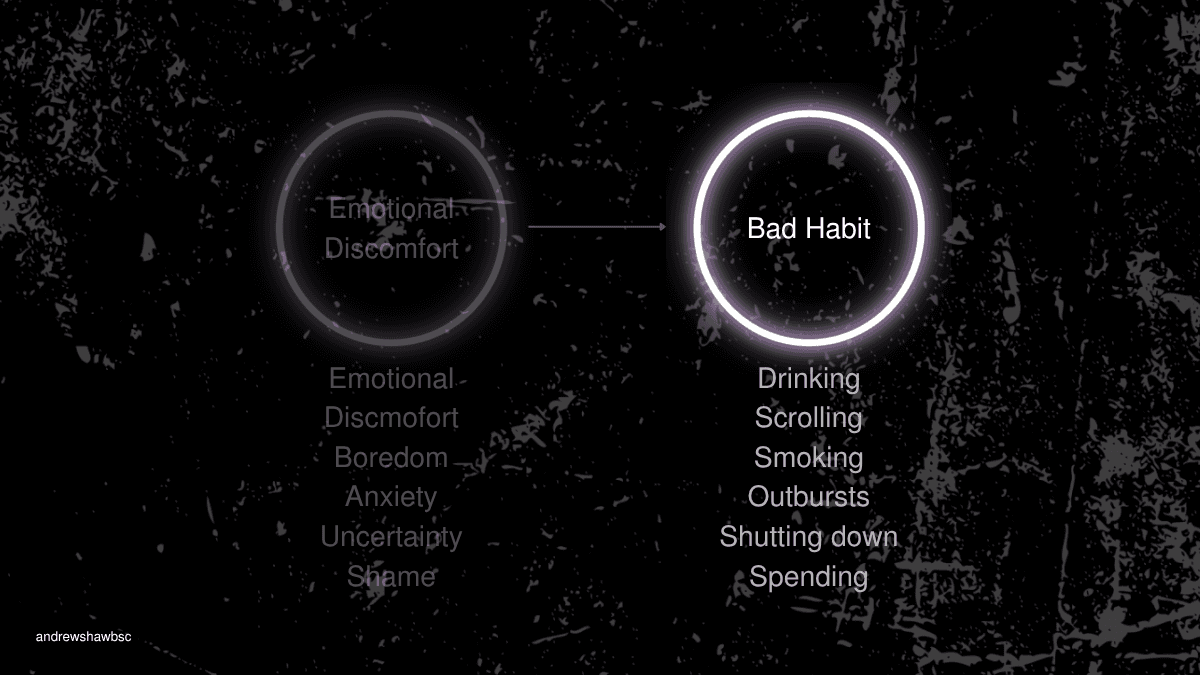
The habit you regret is usually not the real problem. It's a coping mechanism for emotional discomfort.
Behaviours like drinking, scrolling, smoking, shutting down, or overspending temporarily relieve anxiety, shame, loneliness, stress, or pain.
Every time you escape discomfort immediately, your brain learns that avoidance equals safety, strengthening the habit over time.
Chronic avoidance gradually shrinks your life by limiting conversations, opportunities, relationships, and experiences you feel unable to handle.
Real emotional regulation is not eliminating discomfort. It is learning to stay present with difficult emotions without needing to escape them.
Most people think their bad habits are the problem.
The drinking.
The smoking.
The emotional eating.
The scrolling.
The overspending.
The emotional outbursts.
The shutting down.
But what if those behaviours are not the real issue?
What if they are actually coping mechanisms — attempts to regulate stress, anxiety, shame, loneliness, or emotional pain?
Understanding this changes everything.
Because lasting change does not come from simply removing unhealthy habits. It comes from understanding why you need them in the first place.
Why We Develop Unhealthy Habits
Many of the behaviours people judge themselves for are not random acts of self-sabotage.
They are nervous system responses.
They are strategies your mind and body learned to help you escape discomfort.
When stress, uncertainty, anxiety, rejection, or emotional overwhelm feels unbearable, your brain searches for relief.
That relief may come through:
Alcohol
Nicotine
Social media scrolling
Emotional eating
Excessive spending
Anger
Avoidance
Isolation
Procrastination
For a moment, these behaviours work.
They reduce tension. They distract you. They numb emotional pain. They create temporary regulation.
But temporary relief is not the same as healing.
The behaviour does not solve the underlying issue.
It only discharges the discomfort for a short period of time.
The Psychology of Avoidance and Emotional Escape
Every time you escape discomfort immediately, your brain learns an important lesson:
I survived because I avoided the feeling.
Over time, this reinforces avoidance behaviour.
This is how unhealthy coping mechanisms become habits.
Not because you are weak.
Not because you lack willpower.
But because your nervous system starts associating emotional discomfort with danger.
If nobody taught you how to regulate difficult emotions safely, avoidance becomes automatic.
You learn to escape before fully experiencing what you feel.
This is one of the central mechanisms behind:
Anxiety-driven behaviours
Emotional avoidance
Compulsive habits
Addiction patterns
Chronic procrastination
Emotional dysregulation
The behaviour itself is often not the root problem.
The inability to tolerate discomfort is.
How Avoidance Shrinks Your Life
Avoidance never stays limited to one area of life.
Over time, it expands.
You begin avoiding:
Difficult conversations
Emotional vulnerability
Social situations
Opportunities
Responsibilities
Conflict
Uncertainty
Risk
You stop doing things that matter to you because your nervous system predicts discomfort before you even begin.
Gradually, your life becomes organised around emotional avoidance.
Your world becomes smaller.
This is one of the hidden costs of chronic avoidance and poor emotional regulation.
Not only does it damage confidence, relationships, and self-respect, it also limits your ability to live fully.
What Real Emotional Regulation Looks Like
Real emotional regulation is not becoming better at escaping discomfort.
It is developing the ability to stay present with difficult emotions without needing immediate relief.
That does not mean suppressing feelings.
It means learning that anxiety, shame, uncertainty, and emotional pain are survivable experiences.
This is where emotional resilience develops.
Not through avoidance.
But through gradually teaching your nervous system:
Discomfort is not danger
Emotions are temporary
You can feel difficult things without collapsing
You do not need to escape every uncomfortable internal state
The goal is not to eliminate discomfort from your life.
That is impossible.
The goal is to stop letting discomfort control your behaviour.
How to Break the Cycle of Emotional Avoidance
Breaking unhealthy coping patterns starts with a different question.
Instead of asking:
“How do I stop this behaviour?”
Ask:
“What feeling am I trying to escape?”
That question shifts your attention from the symptom to the root issue.
Because sustainable change happens when you build the capacity to experience discomfort without automatically needing relief.
That is how resilience forms.
That is how emotional regulation improves.
And that is how you stop being controlled by habits that once felt impossible to change.

You Don’t Need to Feel Calm to Act Calmly
Oct 9, 2026

Why Do I Procrastinate Even When I Have Time?
Oct 2, 2026

How to respond differently to stress and difficult emotions
Sep 25, 2026

Why You Keep Waiting to Feel Ready Before Taking Action
Sep 18, 2026